

Understanding Market Cycles in Real Estate
If you've followed the real estate market for any length of time, you've likely heard phrases like "it's a seller's market" or "the market is cooling off." These changes are part of a larger pattern known as the real estate market cycle.
While no one can predict exactly what the market will do next, understanding how market cycles work can help you make smarter decisions whether you're buying, selling, or investing in real estate.
What Is a Real Estate Market Cycle?
A real estate market cycle refers to the recurring phases that housing markets experience over time. These cycles are influenced by factors such as interest rates, employment levels, population growth, housing supply, consumer confidence, and the overall economy.
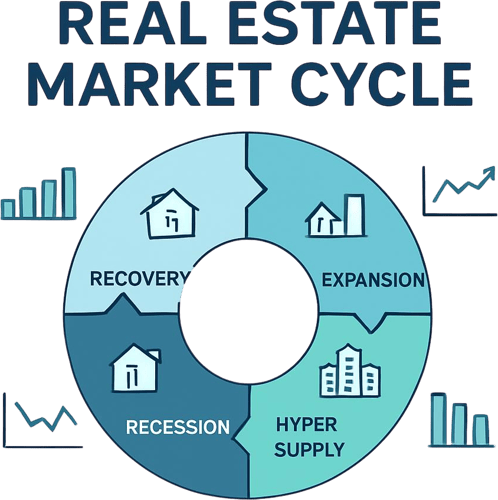
Although every market is unique, most real estate cycles consist of four phases:
- Recovery
- Expansion
- Hyper Supply
- Recession
Let's take a closer look at each phase.
Phase 1: Recovery
Recovery occurs after a market downturn. Home prices may have stabilized, but buyer confidence is often still low.
Characteristics of a recovery market include:
- Slower sales activity
- Higher inventory levels
- Stable or slowly increasing home prices
- Buyers having more negotiating power
This phase can present opportunities for buyers and investors because prices may still be relatively affordable before the next growth cycle begins.
Phase 2: Expansion
During expansion, the market gains momentum. Demand increases, inventory begins to tighten, and home values typically rise.
Common signs of an expansion phase include:
- Increasing home prices
- Strong buyer demand
- Faster sales
- New construction activity
- Growing consumer confidence
This phase often creates favorable conditions for sellers, as competition among buyers can lead to stronger offers and shorter time on market.
Phase 3: Hyper Supply
As prices continue to rise, more homeowners decide to sell and builders increase construction activity. Eventually, supply begins to outpace demand.
Characteristics of this phase may include:
- Rising inventory
- Longer days on market
- More price reductions
- Fewer multiple-offer situations
While home prices may still be increasing, the rate of appreciation often slows significantly. The market begins shifting from favoring sellers toward a more balanced environment.
Phase 4: Recession
In a real estate recession, demand declines while inventory remains elevated. Economic factors such as higher interest rates, job losses, or reduced consumer confidence can contribute to this phase.
Signs of a recession phase include:
- Declining sales activity
- Increased inventory
- Longer marketing times
- Stabilizing or declining home prices
While this phase can create challenges for sellers, it may provide opportunities for buyers who are prepared and financially qualified.
Why Market Cycles Matter
Understanding market cycles can help you make decisions based on long-term goals rather than short-term headlines.
For Buyers:
- You may find less competition during slower markets.
- More inventory often means more choices and negotiating power.
- Waiting for the "perfect" market can sometimes mean missing opportunities.
For Sellers:
- Understanding local conditions helps set realistic pricing expectations.
- Proper preparation and marketing remain important regardless of market conditions.
- Homes that are priced correctly tend to perform better in every phase of the cycle.
For Investors:
- Market cycles can influence cash flow, appreciation potential, and investment strategy.
- Successful investors focus on long-term fundamentals rather than trying to perfectly time the market.
Can You Predict the Next Market Cycle?
While economists and analysts study trends closely, predicting exactly when a market will shift is nearly impossible. Real estate is influenced by many variables, including mortgage rates, economic conditions, local employment trends, and housing inventory.
Rather than trying to time the market perfectly, most successful buyers and sellers focus on whether the timing is right for their personal and financial goals.
The Bottom Line
Real estate markets naturally move through cycles, but every cycle creates opportunities. Whether the market is heating up, cooling down, or somewhere in between, understanding these patterns can help you make confident decisions and avoid costly mistakes.
If you're considering buying or selling, the most important factor isn't necessarily where the market is headed, it's having a strategy that aligns with your goals and working with a trusted real estate professional who understands your local market.





 2820 Camino del Rio South, Ste.314,